
Overview: What we’re analyzing — and why it matters now
Generative AI assistants are now baked into calendars, CRMs and internal chatbots. That convenience has a downside: many data leaks today are not mis-sent attachments but tiny paste-and-upload events—what the industry calls “Shadow AI.” This July 2026 update revisits the control debate between Data Loss Prevention (DLP), Cloud Access Security Brokers (CASB), and Security Service Edge (SSE), adding new vendor trends, practical procurement tests, and short, actionable steps SaaS teams can take now.
Background: How we got here—and what changed since June 2026
Two structural shifts created the problem, and three short-term developments since mid‑2026 have altered how teams choose controls.
- Persistent shifts: Work lives in web apps; text is the atomic unit of most workflows. A sensitive disclosure is often a copied snippet, not a full file.
- Persistent shifts: AI features are standard in major SaaS products. Sanctioned and unsanctioned AI tools share browsers and endpoints, blurring enforcement boundaries.
- Recent developments (July 2026): Major AI vendors now routinely offer explicit enterprise options—dedicated model instances, contractual “do‑not‑train” clauses, and clearer retention controls—which changes procurement leverage. At the same time, several large security vendors have shipped text‑embedding engines inside DLP and SSE products to improve semantic detection.
- Endpoint enforcement rise: Managed browsers, browser isolation, and client‑side redaction (including lightweight on‑device models) are maturing as pragmatic enforcement points when full TLS interception is unacceptable.
- Regulatory and audit pressure: Regulators and internal auditors increasingly expect documented decisions on transcript retention, model training, and TLS inspection—making the technical choice part of legal and risk workflows.
Data/Evidence: What vendor telemetry and industry signals show (Jan–July 2026)
Vendor telemetries and customer engagements since January 2026 reinforce three themes:
- Text snippets remain the top leakage vector. Security logs show frequent, small uploads of identifiers, code fragments, and draft communications—slipping past file‑based DLP rules.
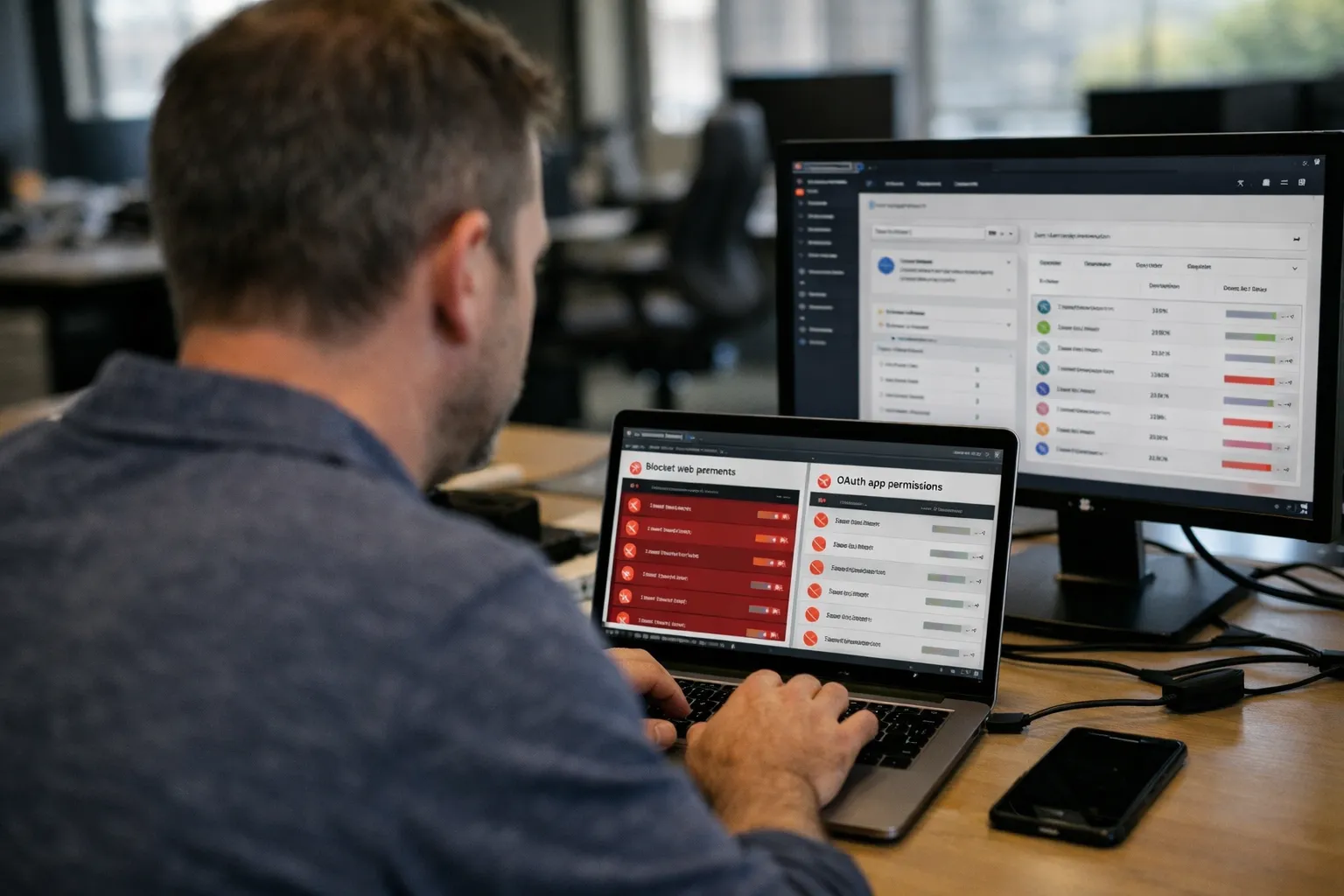
- OAuth and app consent sprawl is the multiplier risk. Admin consoles still surface large numbers of third‑party app grants; a nontrivial share retain scopes that can read mailboxes or file stores and forward content to external models.
- Inline enforcement reduces incidents fastest, but costs persist. Teams that combine semantic DLP with a managed browser or SSE inline policies see paste/upload incidents decline fastest—but they shoulder operational overhead and privacy tradeoffs that require clear governance.
These are not theoretical: procurement conversations now routinely include model‑training clauses and retention windows. Security teams report the fastest wins come from tightening consent defaults, deploying managed‑browser policies for high‑risk groups, and providing approved AI alternatives inside enterprise platforms.
Multiple perspectives: What stakeholders want in July 2026
Security leaders
Want prevention and forensic evidence. They want DLP signals tied to identity and an auditable trail showing whether an uploaded snippet was sent to an enterprise or third‑party model. Contractual commitments from AI providers—about retention, deletion, and training—are table stakes in procurement conversations.
IT admins
Want low‑friction controls. The pragmatic workflow is still "visibility first, coaching next, block last." Managed browsers and lightweight browser extensions that enforce paste/upload policies get the most buy‑in because they avoid decrypting all corporate TLS traffic.
Legal and compliance
Care about demonstrable governance. Their checklist now routinely includes app inventories, documented retention choices for assistant transcripts, and vendor language about model training. They also ask whether TLS inspection will be audited and how exceptions are logged.
Business leaders
See AI as productivity fuel and prefer risk‑smart enablement over bans. They will accept controls that nudge users to approved assistants or that provide safe, integrated AI inside workflows rather than blocking generically.
Analysis: DLP vs CASB vs SSE — what’s different in July 2026
DLP: Semantic detection is better, but context still matters
Where DLP improved: Several vendors have embedded semantic techniques—text embeddings and similarity searches—so a DLP rule can flag "contractual language" or "customer identifiers" even when disguised by paraphrase. That reduces obvious false negatives.
Where DLP still wins:
- Content classification across sanctioned storage (Mail, Docs, Slack) and integration with legal workflows.
- Automated redaction and masking for exports from sanctioned systems.
Where DLP still struggles:
- Stopping a paste into an unaffiliated web chatbot in the moment unless paired with an enforcement point (managed browser, SSE inline, or client‑side redaction).
- Operational tuning: embedding‑based rules can surface noisy matches that require business context to resolve.
CASB: OAuth governance is the most valuable and fastest win
CASB tooling has doubled down on identity signals and consent hygiene—automated consent revocations, risk‑scored app inventories, and playbooks tied to business owners.
Strengths:
- Discovery and remediation of risky OAuth grants—arguably the quickest win for Shadow AI risk.
- API‑level visibility into sanctioned SaaS AI features and configuration drift.
Limitations:
- API‑mode CASB is often retrospective. It finds and heals risky grants faster than it prevents an in‑moment paste to a new web model.
- Coverage gaps for brand‑new or niche AI services until integrations catch up.
SSE: Inline prevention is best‑in‑class if you accept the tradeoffs
SSE vendors improved the UX for "coach vs block" nudges, tightened integration with enterprise browsers, and added semantic DLP plugins. Inline inspection combined with managed browsers is the most effective technical prevention available today—if you can deploy it.
Strengths:
- Real‑time warnings and blocking of paste/upload to web‑based AI tools.
- Allowlists that steer users to approved tools and integrated coaching messages.
Weaknesses:
- Operational complexity across unmanaged devices and mobile remains a challenge.
- TLS inspection is still a governance and compatibility decision; sensitive teams may require explicit exceptions and alternative controls.
New options worth noting (July 2026)
- Enterprise model instances: Many large AI providers now offer dedicated model instances or private deployments with contractual non‑training guarantees. That makes vendor choice a technical and legal mitigation, not just a UI setting.
- Client‑side redaction and local LLMs: Lightweight on‑device models can pre‑scan and redact sensitive text before it leaves the endpoint. This approach reduces central inspection needs but shifts privacy considerations to endpoint processing.
- Embedding‑based SIEM rules: Security teams increasingly push semantic signals into SIEMs and SOAR platforms, using similarity scoring to correlate paste events with known sensitive records for faster triage.
Implications: Practical takeaway for SaaS teams
Three concrete implications for July 2026:
- Identity and consent hygiene are your quickest wins. Audit OAuth grants, tighten default consent, and automate revocations for apps that request broad scopes. If you can’t control who can connect, web blocking is only a brittle band‑aid.
- Use managed browsers and client‑side redaction for high‑risk groups. When full SSE routing is impractical, a managed browser policy with paste/upload controls plus device‑side redaction delivers a strong balance of prevention and privacy.
- Make vendor contracts part of your security design. Obtain explicit DPA clauses or enterprise model agreements that limit training on customer data, define retention windows for transcripts, and provide auditability. Procurement now shapes what controls are effective.
Outlook: What to watch next (next 6–12 months)
- Vendor consolidation and packaging: Expect CASB, SSE and DLP capabilities to be offered in tighter bundles that lead with identity and semantic detection. Don’t assume "bundled" equals "best fit"—test workflows.
- More enterprise model options: Expect additional vendors to offer private model instances, configurable retention, and clearer non‑training terms—giving legal teams more leverage.
- Edge and client enforcement: Adoption of client‑side redaction and lightweight local models will grow, especially for regulated teams that reject pervasive TLS inspection.
Who this is for: Quick start guidance
- Microsoft 365 / Google Workspace admins: start with enforceable app consent policies, schedule immediate OAuth cleanup, and expand native semantic DLP. Add managed‑browser policies for sales, legal, and product teams.
- Security teams chasing web‑based leaks: pilot SSE inline policies for a small, high‑risk cohort; emphasize "coach before block." Supplement with CASB API scans to find lingering OAuth risk and push embedding signals into SIEM for correlation.
- Mid‑market shops: pick an approved AI tool integrated into your stack, tighten consent defaults, and enable logging and alerting. You’ll get most of the benefit without a full security overhaul.
Procurement test: Ask every vendor to demonstrate seven workflows (updated)
- Block and log a user pasting a customer’s personal data into a named external AI chatbot in real time—show the end‑to‑end evidence and remediation steps.
- Detect and revoke a risky OAuth app that has "read all files" scope; show the audit trail and automated notification to the business owner.
- Demonstrate client‑side redaction: redact a Social Security number or API key before it would be sent to an external model, and show that the redaction is logged and reversible for forensics.
- Show how embedding‑based DLP flags a paraphrased secret (e.g., an API key written in prose), and how a SOC analyst can tune that rule without mass false positives.
- Prove you can route a high‑risk team through SSE inline policies while keeping regulatory teams on a TLS‑inspection‑free path (exceptions and policies demonstrated).
- Provide the exact DPA/enterprise agreement language (redacted as needed) that covers model training, retention windows, and audit rights for customer data.
- Demonstrate logging and SIEM integration: show that paste/upload events, OAuth changes, and DLP hits are correlated and searchable for 365 days (or your required retention window).
FAQ
What’s the fastest way to reduce Shadow AI risk without crippling productivity?
Start with identity cleanup. Audit and revoke risky OAuth grants, tighten consent defaults, and publish an approved AI tool list. Then deploy managed‑browser policies or client‑side redaction for high‑risk groups. Those steps reduce most paste‑based leaks while preserving useful AI access.
Is modern DLP now sufficient to stop paste‑to‑ChatGPT leaks?
Not by itself. Semantic, embedding‑based DLP improves detection, but preventing a real‑time paste usually requires an enforcement point—SSE inline, a managed browser, or client‑side redaction. Combine detection with identity controls for best results.
How important are vendor contracts and "do‑not‑train" clauses?
Increasingly important. Technical controls cut exposure, but contract language governs what a provider can do with any retained transcripts. Push for explicit non‑training options, clear retention windows, and audit rights where possible.
Can we rely on blocking the “AI” web category at the gateway?
It’s a blunt but sometimes useful stopgap. It reduces risk quickly but often drives users to unsanctioned apps or personal devices. A better approach: allowlist approved tools, combine blocking of unknowns with identity controls, and provide safe alternatives integrated into workflows.
Who should own Shadow AI risk inside an organization?
It’s cross‑functional: security owns enforcement tooling, IT owns deployment, legal/compliance owns vendor terms and retention decisions, and business leaders decide acceptable productivity tradeoffs. A joint steering group with clear RACI speeds decisions and avoids policy drift.
Actionable next step: this week, run an OAuth inventory and pick one high‑risk team (sales or legal) to pilot a managed‑browser policy with semantic DLP and coaching messages. That single project will reduce most paste‑based leak signals and give you a repeatable playbook.
— Alex Rivera, Technology Editor